
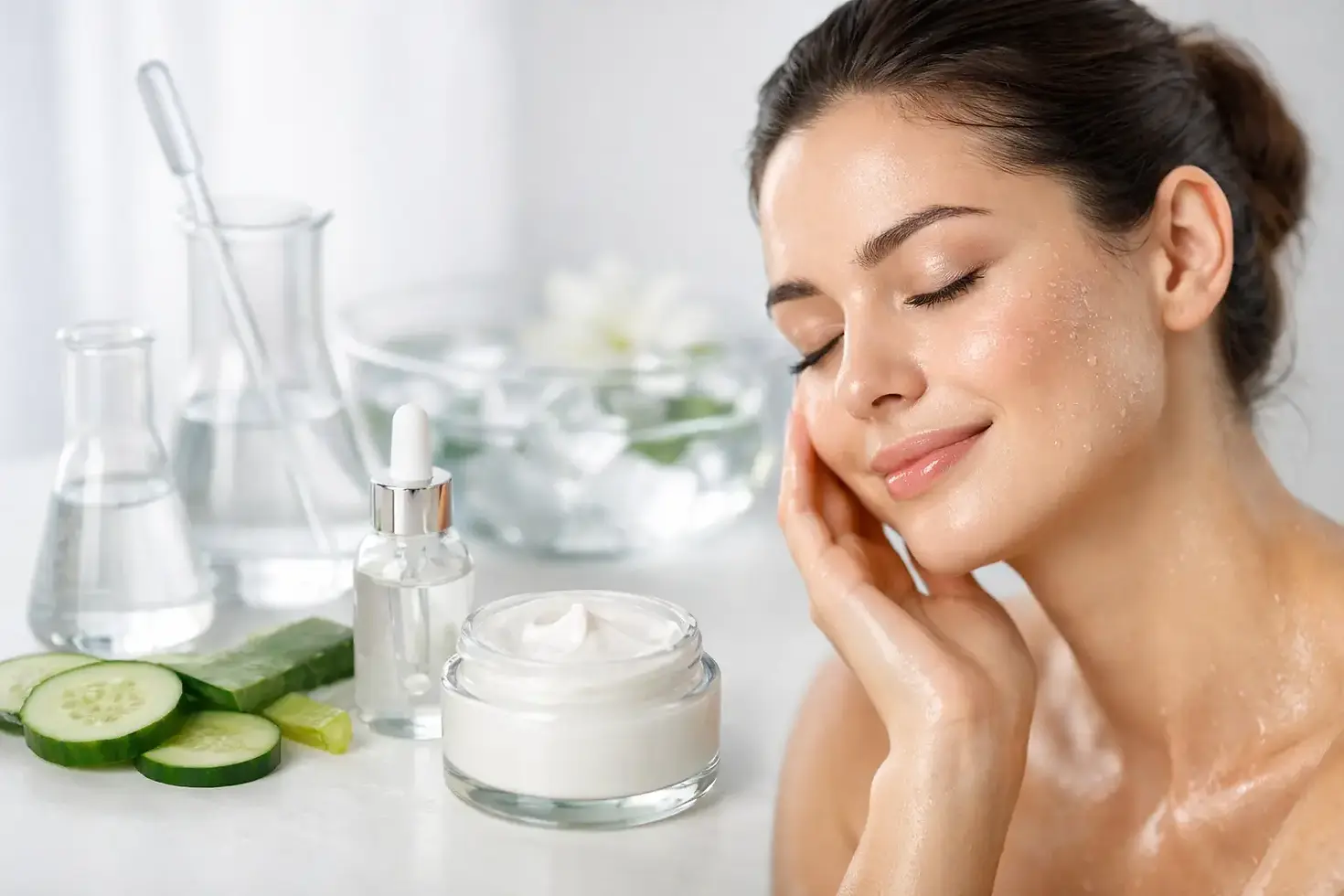
Best Treatments for Dehydrated Skin That Work
- LEESHELL SKINCARE

- Aug 11
- 6 min read
That tight, papery feeling that appears by afternoon - even when your skin is usually oily or combination - is often dehydration, not simply dryness. The best treatments for dehydrated skin focus on replenishing water, helping it stay within the skin, and removing the everyday habits that quietly leave your complexion depleted.
Dehydrated skin can look dull, make fine lines appear more visible, and cause makeup to settle unevenly. It may also feel reactive or produce extra oil in response to a lack of water. The answer is rarely piling on the richest cream in your cabinet. A beautiful hydration ritual works in layers: cleanse with care, invite water back into the skin, then create a soft veil that helps hold it there.
Dehydrated Skin vs. Dry Skin
Dry skin is a skin type characterized by a lack of natural oils or lipids. Dehydrated skin is a temporary condition caused by insufficient water. This is why someone with an oily T-zone can still have dehydrated cheeks, texture around the mouth, or a complexion that feels tight after cleansing.
The distinction matters because oil alone will not fully resolve dehydration. A face oil can give skin a satin finish and support the moisture barrier, but it does not supply water. Likewise, a lightweight hydrating serum may feel lovely at first but needs a moisturizer or oil on top to prevent that hydration from evaporating.
Look for signs such as a sudden loss of glow, fine lines that look more pronounced when you smile, tightness after washing, flaking that comes and goes, or skin that drinks in product yet still feels uncomfortable. If you are dealing with persistent burning, cracking, swelling, or a rash, pause new products and speak with a dermatologist.
The Best Treatments for Dehydrated Skin
The most effective approach is a consistent routine rather than one dramatic treatment. Think of it as restoring a calm, cushioned environment for your skin each morning and evening.
Start with a low-stripping cleanse
A cleanser should leave your face feeling fresh and comfortable, never squeaky or tense. Very hot water, strong foaming cleansers, and repeated cleansing can remove the lipids that help your skin retain water. If your skin feels tight within minutes of washing, your cleanser may be working too aggressively for your current needs.
Use lukewarm water and massage your cleanser lightly rather than scrubbing. In the morning, some people with very dehydrated skin do well with a quick rinse or a minimal cleanse, especially if they cleansed thoroughly the night before. At night, remove sunscreen and makeup without turning cleansing into an extended exfoliating session.
A soft, comforting formula such as a hydration-focused cream or gel cleanser creates a more elegant first step. LEESHELL Hydration Veil Cleanser fits naturally into this kind of ritual, where clean skin still feels supple rather than exposed.
Apply hydrating layers while skin is still damp
The moment after cleansing is prime time for hydration. Pat your face so it is damp, not dripping, then apply a hydrating toner, essence, or serum. Humectants such as glycerin, hyaluronic acid, panthenol, aloe, and beta-glucan draw water toward the skin and give it a fuller, smoother look.
More is not always better. One or two thin layers are usually enough, particularly in humid weather. In dry indoor heat, on a long flight, or during a cold spell, a second light layer can make a visible difference. Press each layer in with your palms instead of rubbing vigorously. The goal is a quiet, cushioned finish, not a sticky surface overloaded with product.
A rose-infused hydrating toner can be especially pleasing for a ritual that feels both refreshing and comforting. Follow it with a hydrating serum before moving to your richer finishing steps.
Seal in water with a barrier-supporting moisturizer
A moisturizer is the anchor of a dehydrated-skin routine. It should contain a balanced blend of humectants, emollients, and occlusives. Humectants bring in water; emollients soften rough texture; occlusives create a protective layer that slows water loss.
Ingredients such as ceramides, squalane, fatty acids, shea butter, dimethicone, and plant oils can be useful, but the best texture depends on your skin and climate. A gel-cream may be enough for oily or combination skin in summer. A richer cream may be more comfortable for dry skin, mature skin, or anyone facing crisp winter air and indoor heating.
Do not judge a moisturizer only by how heavy it feels. The right formula should leave your skin velvety and at ease, not greasy, congested, or coated. Give a new moisturizer at least a week of consistent use before deciding whether it is the right fit.
Use face oil as a finishing touch, not the whole treatment
Face oils can make dehydrated skin look luminous because they soften the surface and reduce the feeling of dryness. They are especially welcome when skin feels rough, dull, or stressed by seasonal changes. Yet oil is best viewed as a finishing touch over water-based hydration and moisturizer.
Press two or three drops over your evening moisturizer, concentrating on the cheeks and any areas that feel tight. If your skin is oily or prone to clogged pores, use less and choose a lightweight texture. There is no need to force an oil into every routine. A well-formulated moisturizer may provide all the comfort your skin needs.
Protect your skin every morning
Daily sunscreen is part of hydration care. Sun exposure can compromise the skin barrier, contribute to uneven tone, and make a depleted complexion look more fatigued. Apply a broad-spectrum SPF 30 or higher as the final step of your morning routine.
If sunscreen tends to pill, simplify the layers beneath it. Let your serum and moisturizer settle for a minute or two, then apply sunscreen with a gentle pressing motion. A routine that is easy to wear every day will always serve your skin better than an elaborate one you abandon after a week.
Treatments to Pause When Skin Feels Depleted
Dehydrated skin often needs less stimulation, not more. If your face is tight, stinging, or flaky, take a short break from strong exfoliating acids, retinoids, harsh scrubs, and drying clay masks. These treatments can be valuable for texture, congestion, or renewal, but timing matters.
This does not mean you must avoid active ingredients forever. Once your skin feels calm and hydrated again, reintroduce one active slowly. Use it one or two nights a week, follow with a nourishing moisturizer, and watch how your skin responds. If your goal is radiance, a measured routine often delivers a clearer glow than frequent exfoliation.
Over-cleansing is another common culprit. So is using a new active serum, exfoliating polish, and renewal cream all in the same week. Give your complexion room to respond. Refined skincare is not about doing the most; it is about choosing what your skin can comfortably receive.
A Simple Morning and Evening Hydration Ritual
In the morning, cleanse lightly if needed, then apply a hydrating toner or serum, moisturizer, and sunscreen. If your cheeks need extra comfort, add a small amount of face oil before sunscreen only if the formulas sit well together.
At night, cleanse away the day, apply your hydrating layer to damp skin, follow with serum and moisturizer, then press in a few drops of oil if desired. On nights when your skin is especially depleted, keep the ritual beautifully simple. Hydration does not require a crowded shelf.
Body skin deserves the same attention. Apply lotion or body cream within a few minutes of showering, while skin is still slightly damp. Keep showers warm rather than hot, and choose a gentle body cleanser. The result is skin that feels more like cashmere than a surface you need to keep rescuing.
When Lifestyle Is Part of the Treatment
Skincare is the daily veil, but your surroundings shape the result. Dry air, air conditioning, central heat, travel, stress, alcohol, and poor sleep can all leave the complexion looking less rested. Drinking water supports overall health, although it is not a substitute for topical hydration when the skin barrier needs support.
A bedside humidifier can be helpful in dry seasons. So can avoiding long, hot showers and wearing a scarf or protective layer when cold wind leaves your face feeling raw. Small choices repeated consistently give your skin the conditions it needs to recover its natural-looking luminosity.
Let your routine feel like a reset, not a correction. When you meet dehydrated skin with gentle cleansing, water-rich layers, and a comforting final seal, that tight, tired feeling can gradually give way to a complexion that looks smooth, luminous, and quietly restored.



Comments